

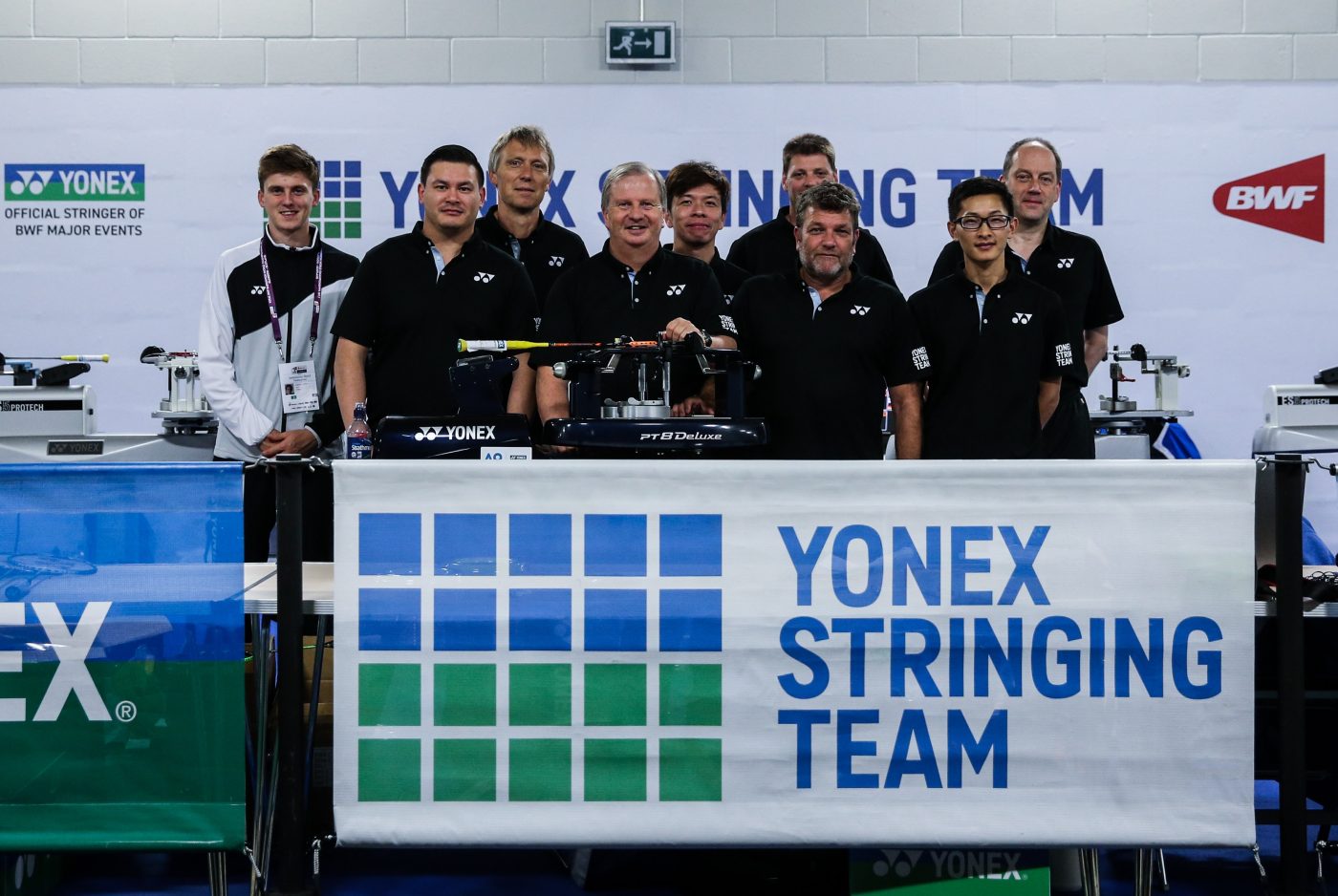
In 1994 the Yonex All-England Championships packed up its bags and moved from its traditional home at Wembley Arena to its new base at the National Indoor Arena in Birmingham, which had hosted the World Championships the previous year.
As part of the makeover Yonex wanted to promote and develop its range of strings and so invited stringers from some of its UK accounts to come to Birmingham and provide a racket stringing service for the players.
I was fortunate enough to be one of those stringers and I have remained part of the Yonex All-England team ever since.
Initially all the stringers had to bring their own machines which resulted in an interesting array of mainly crank machines, including a table top version which its owner, Dave Stepney, mounted on a Black and Decker workmate!
Back then there was a qualifying event held at Watford Leisure Centre and so on the last day of the qualifying competition we would transport our machines to Birmingham and set up in one corner of the arena floor, next to Geoff Hinder and the shuttlecock control desk.
Being on the arena floor was great from the point of view that we were very visible to all the spectators, but we ran a constant battle with the management committee to get more light into the stringing area – something that is very important when you are spending 10-12 hours a day trying to pass a 0.7mm string through 1.2mm holes!
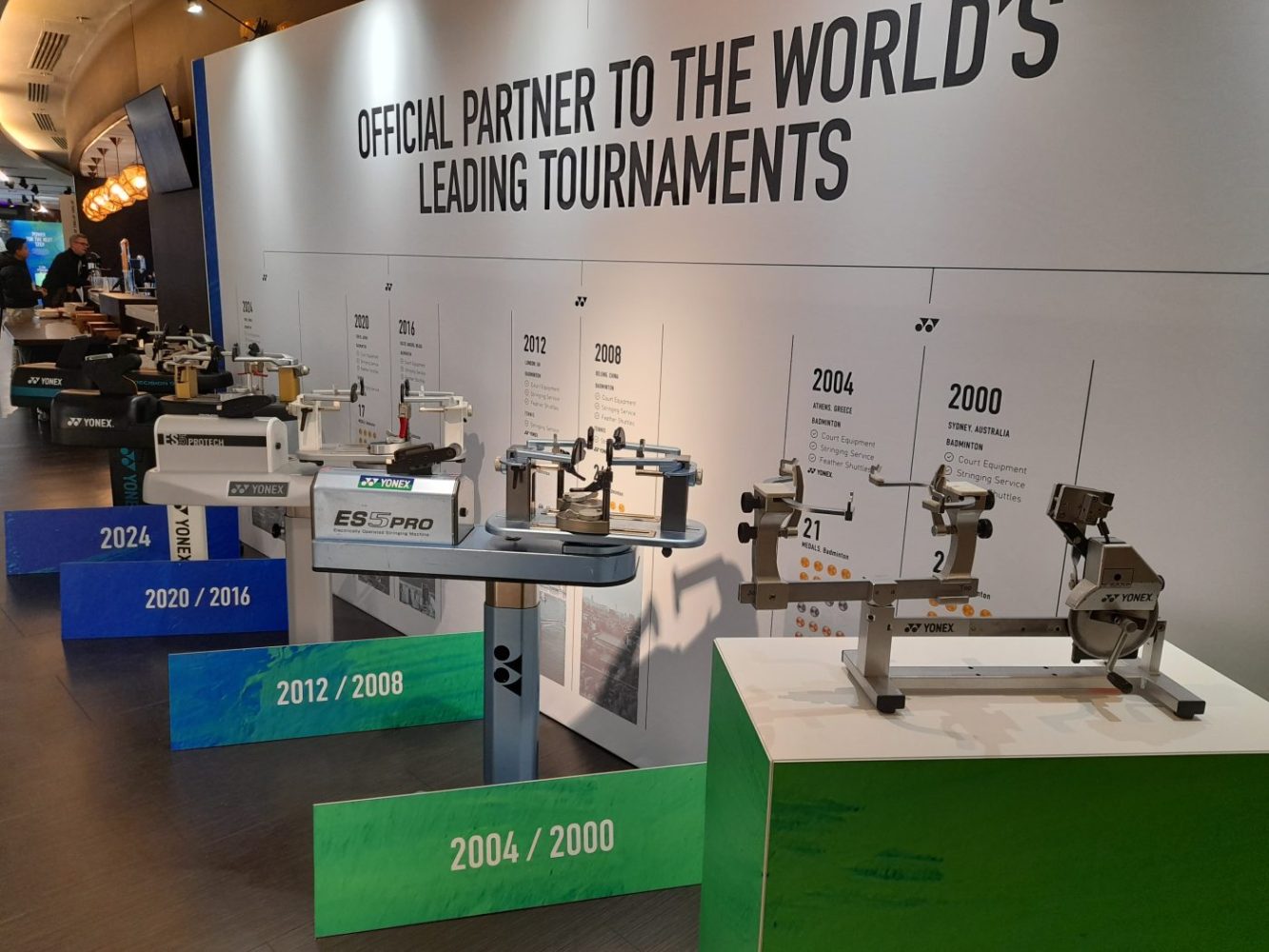
How the stringing machines have changed!
The process was, and to some extent remains, very simple in that a player brings his or her rackets to the string service desk, fills out a form saying what string and tension they require and then leaves them with us to get the job done.
Having also worked at some tennis events there is an interesting comparison with how the service works for both sports. In tennis most players have a number of rackets strung prior to each match, whereas in badminton players will tend to have their rackets strung at the start of the event, but not necessarily (with one or two exceptions) for each match thereafter, unless of course they break any strings, which, with the tensions they are using, is quite often.
So generally we are very busy at the start of events – we will regularly get two-thirds of the total number rackets we receive, handed to us during the practice days, before the first match has even gone on court.
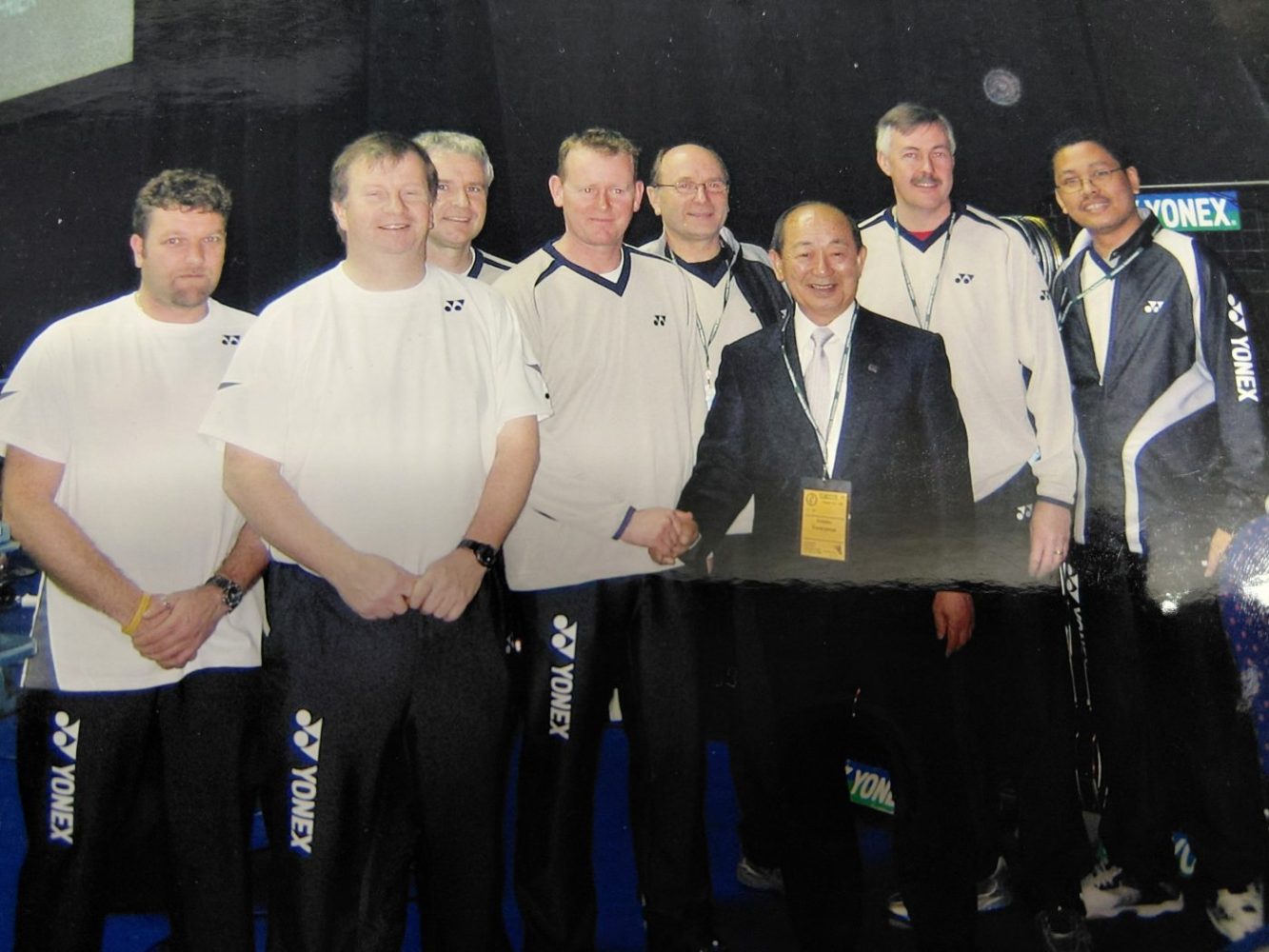
The first event we worked at other than the Yonex All-England was the World Championships in Glasgow in 1997.
At the All-England back then we started the week with six stringers, in Glasgow we discovered we only had three, and this was at a time when the World Championships were combined with the Sudirman Cup over a two week period, so there were many more players and very soon we were engulfed with rackets and did not know which way to turn or which rackets to do next.
Somehow (with some help from Denmark) we survived, but it prompted a change in the way we ran the service.
Initially it was just to number each worksheet and to use different coloured sheets each day so that we could see the order in which rackets had arrived and could therefore prioritise which rackets to do next.
As PCs and Windows came into more common usage a fairly basic spreadsheet was developed which over time has evolved into our current database which shows the numbers of rackets strung using each type of string, the number of each racket model we receive, the range of tensions being used and numerous other data fields.
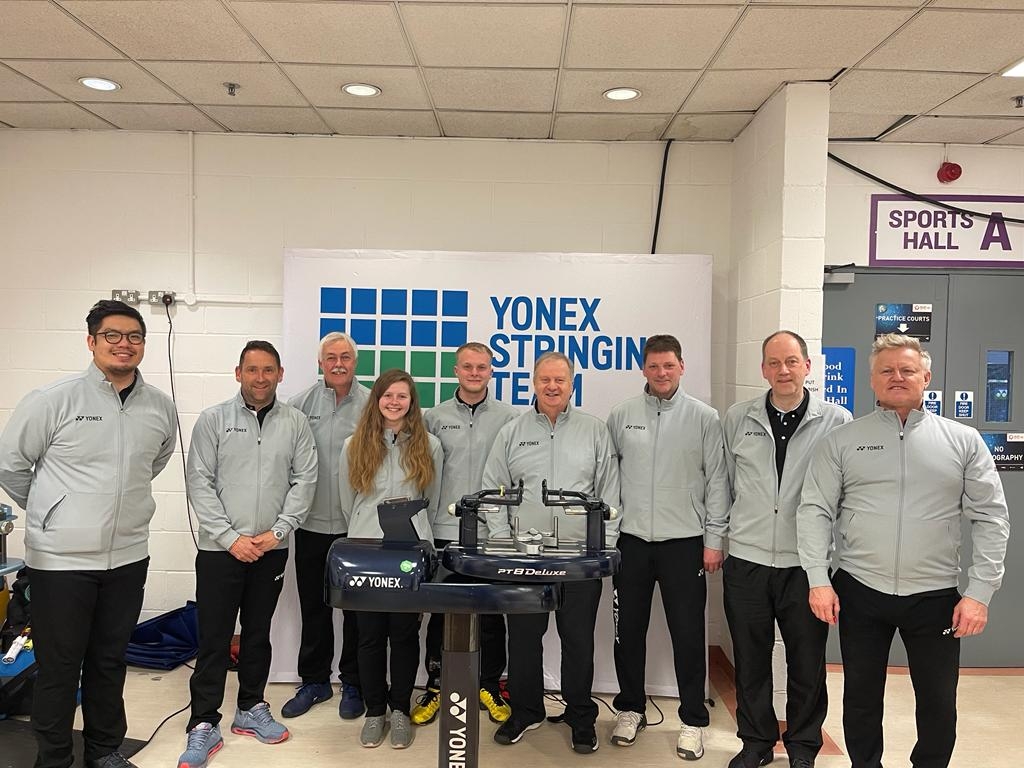
The team in their current location at Arena Birmingham
Back at the Yonex All-England sometime in the teenage years of the twenty-first century, BWF decided to clear the arena floor of everything not directly involved with the matches being played and so the stringing team were moved up onto the concourse.
This meant that the spectators could see up close what we were doing and the tensions the players were using. The downside was that security became more of an issue as spectators, inevitably, wanted to touch and feel their favourite player’s racket, and we did not have the room to store them away from inquisitive hands. This lasted for a few years until we were moved again, this time down by the practice courts underneath the arena which is where we currently hang out each March.
It means we no longer have the exposure to the public, but it is a lot easier for players to drop off and collect rackets without the constant requests for photos or autographs.
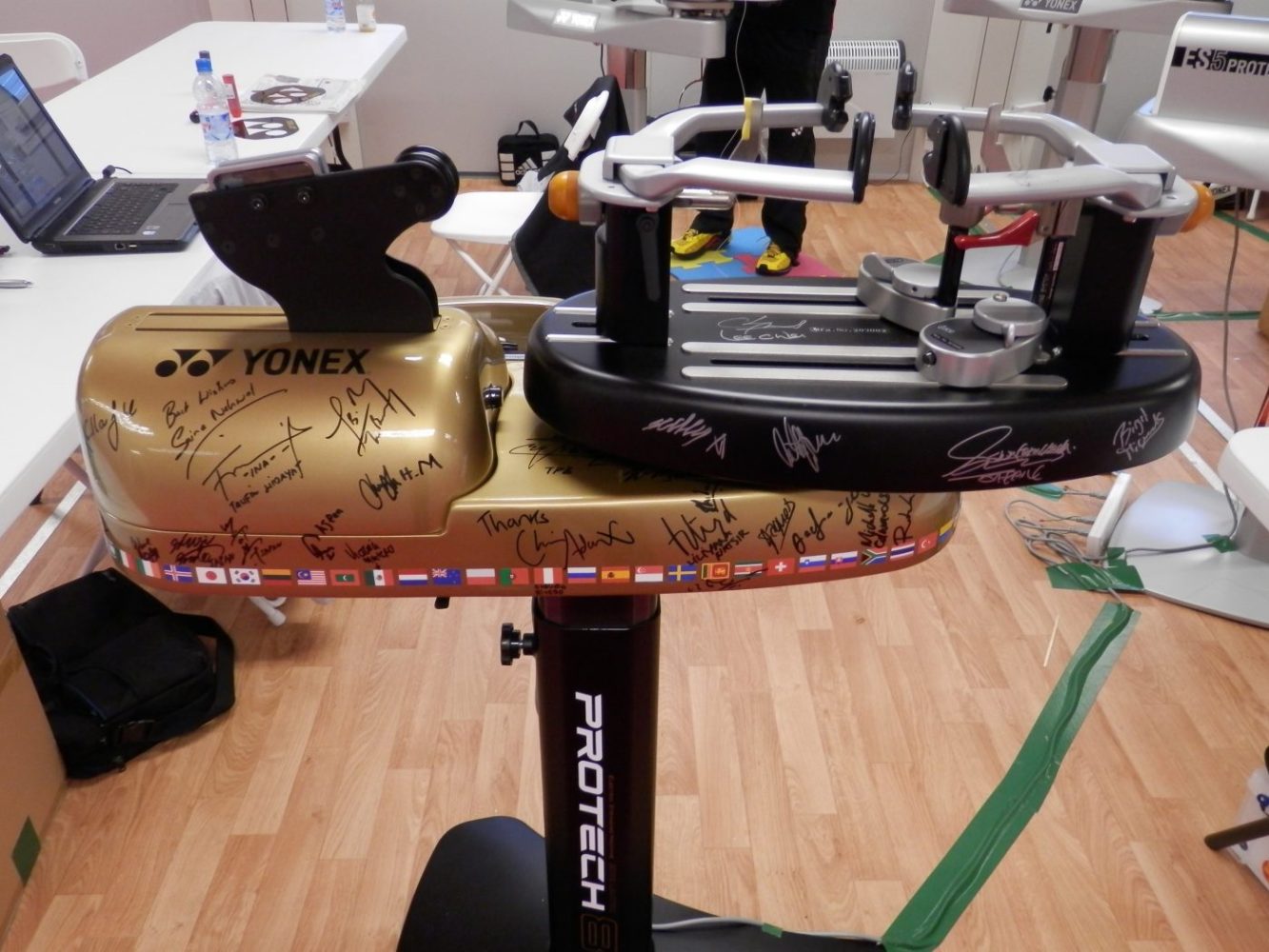
Spectators are not the only autograph hunters!
Worldwide and away from the All England, the Yonex stringing team was increasingly being used at major events where Yonex were the sponsors.
In 2001 we were at the World Championships again, this time in Seville, in 2003 at the first stand a lone Sudirman Cup in Eindhoven and then in 2004, the big one, our first Olympic Games in Athens.
Tournaments in Asia became a regular thing – Japan, China, Malaysia, Indonesia – and along the way we recruited some of the best stringers in these countries into our merry band of brothers.
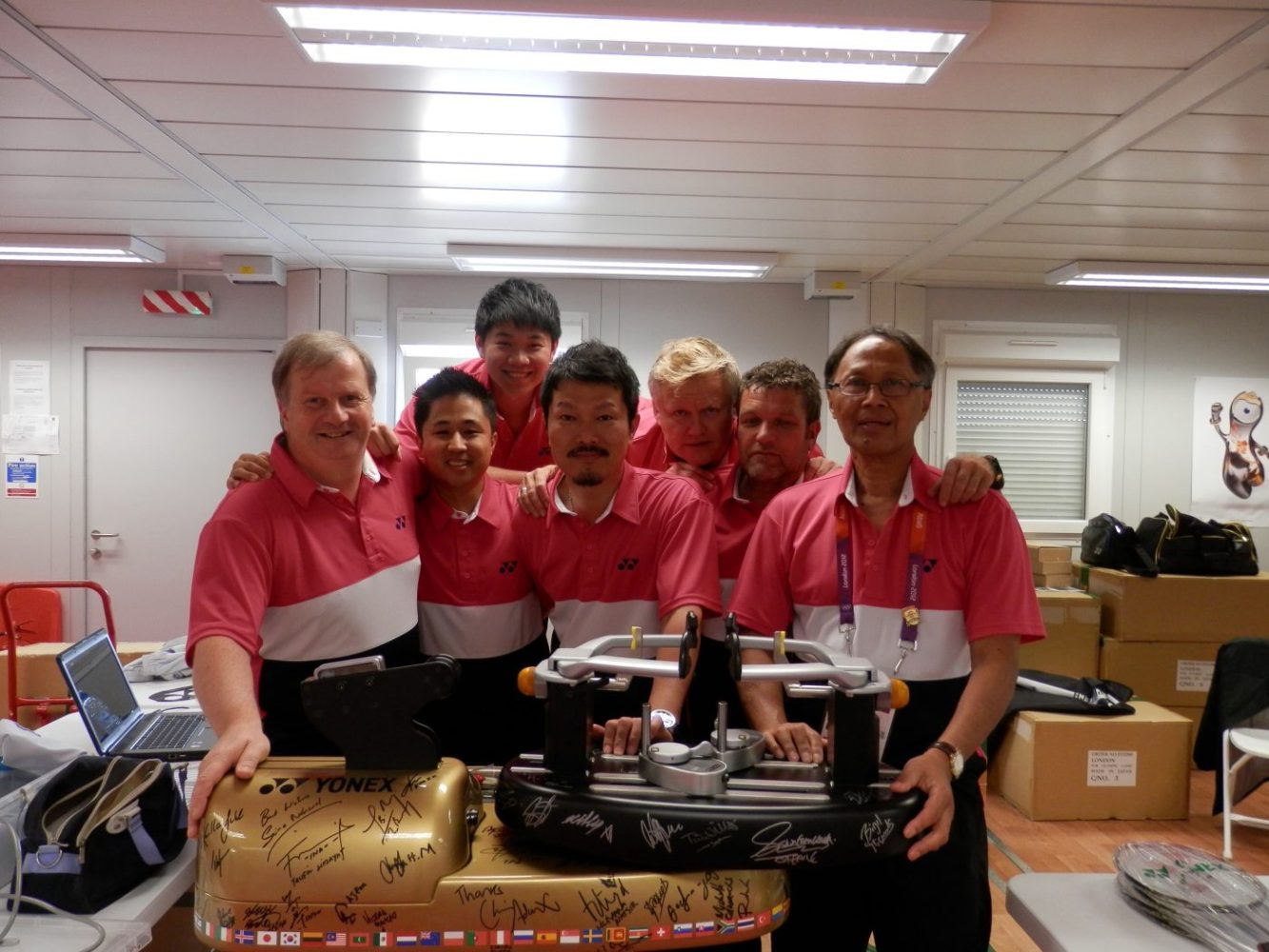
The International 'Family'
Following on from Athens three of us, Tim Willis, Andy Gudgeon and myself were offered contracts with Head Office in Tokyo, a move that enhanced the image and status of the Stringing Team.
Team shirts and tracksuits were introduced, a Stringing Team page appeared on the Yonex website and we started delivering stringing seminars, disseminating best practice to stringers around the world.
Much of the credit for this should go to Toshi Yuza, Yonex promotions manager, who we first met in Eindhoven and who championed the stringing team and was responsible for overseeing much of its development.
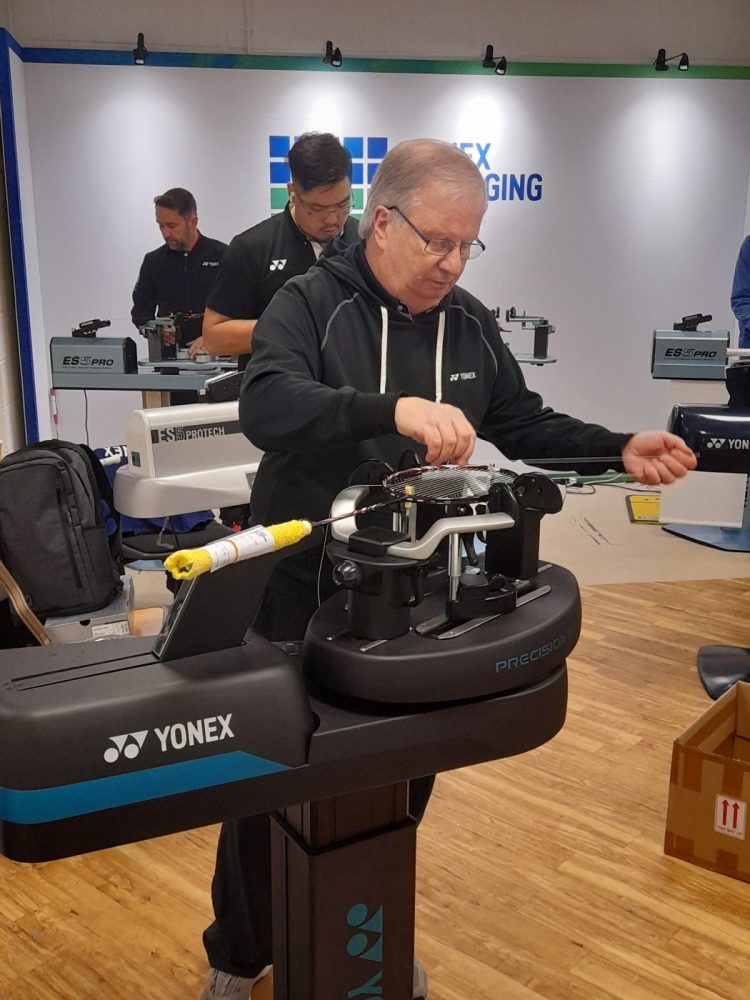
Stringing in progress
So what are the current trends? What are the players using? Well in terms of string popularity, the No1 is, and has been for some time, BG80.
More recent introductions into the range – Aerobite and Exbolt 65 are eating into BG80’s superiority, and these are currently the big three amongst the professional players.
Tensions range from the mid twenties, some of the Japanese ladies are as low as 23-25lbs, up to the low to mid thirties. One of the tightest has been the recently retired world no 1, Viktor Axelsen at 32 x 34lbs with a 10% pre-stretch.
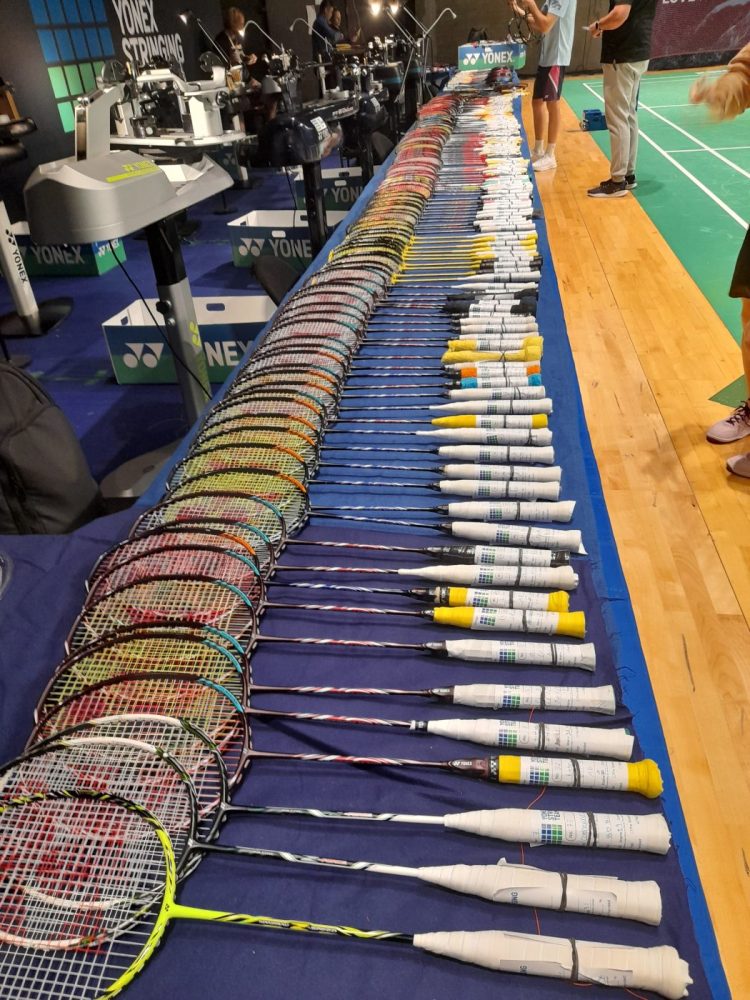
Strung and ready to play
A word of warning to lesser mortals, Viktor’s perfect technique combined with his racket head speed enable him to benefit from these tensions. Also, he will have in excess of 250 restrings a year. If your average club player wants to use these tensions they will end up paying more for restrings, quite possibly damage their shoulder and all for no gain in performance.
Over the years there have been many highlights and many anecdotes that can wait for another time. We have strung for almost all of the World’s top players over the last 30 years, often at the most important moments of their careers.
We have received many thanks and compliments (mainly from those that won), but very few complaints. We have, and continue, to demonstrate the importance of good stringing, and good stringing technique, to all badminton players, from Olympic Champions to the most humble of beginners.
PS. Of the three contracted stringers, Andy Gudgeon tragically passed away in 2007. His work and enthusiasm set the seeds for many of the developments that have happened since.
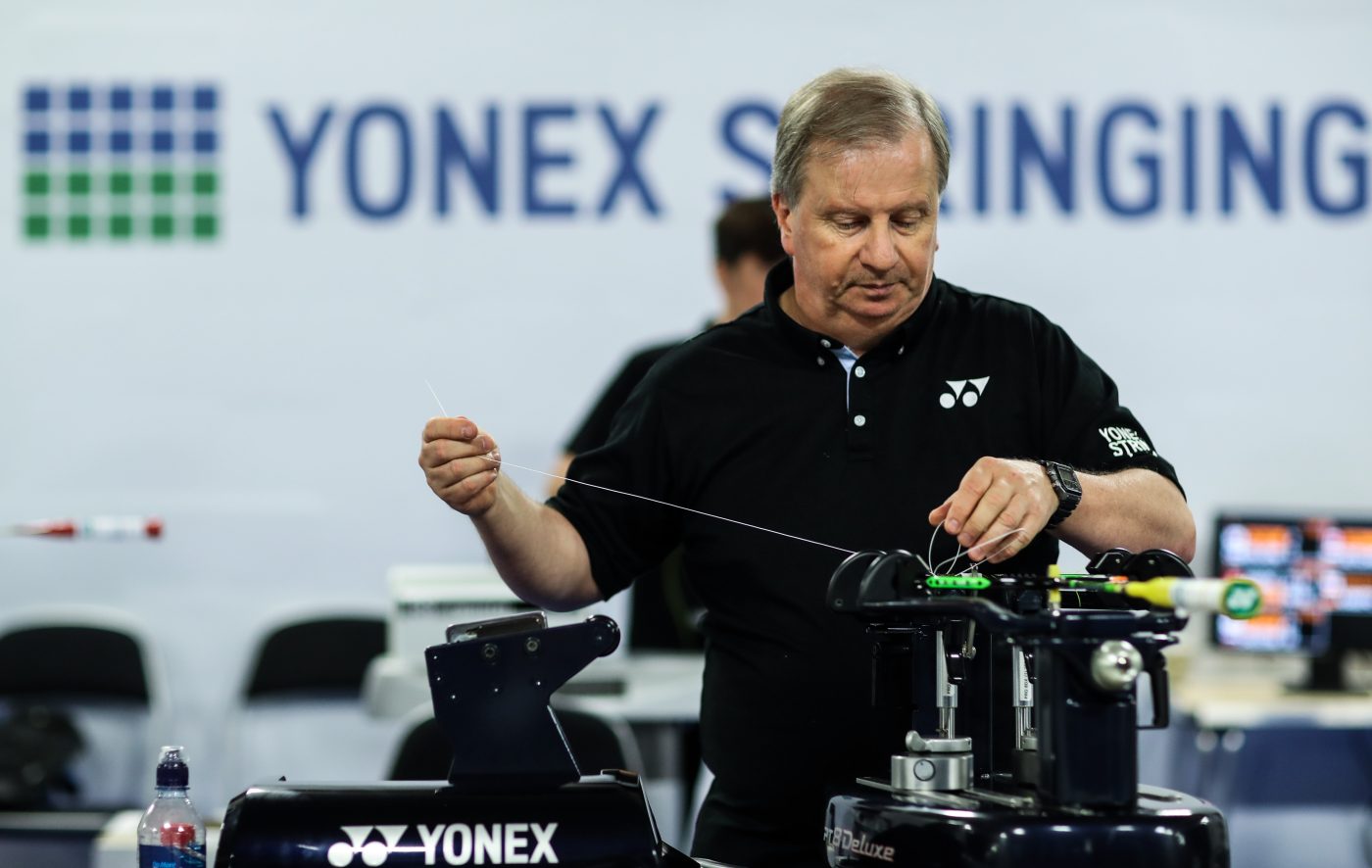
Mark Lawrence, Yonex Stringing Team